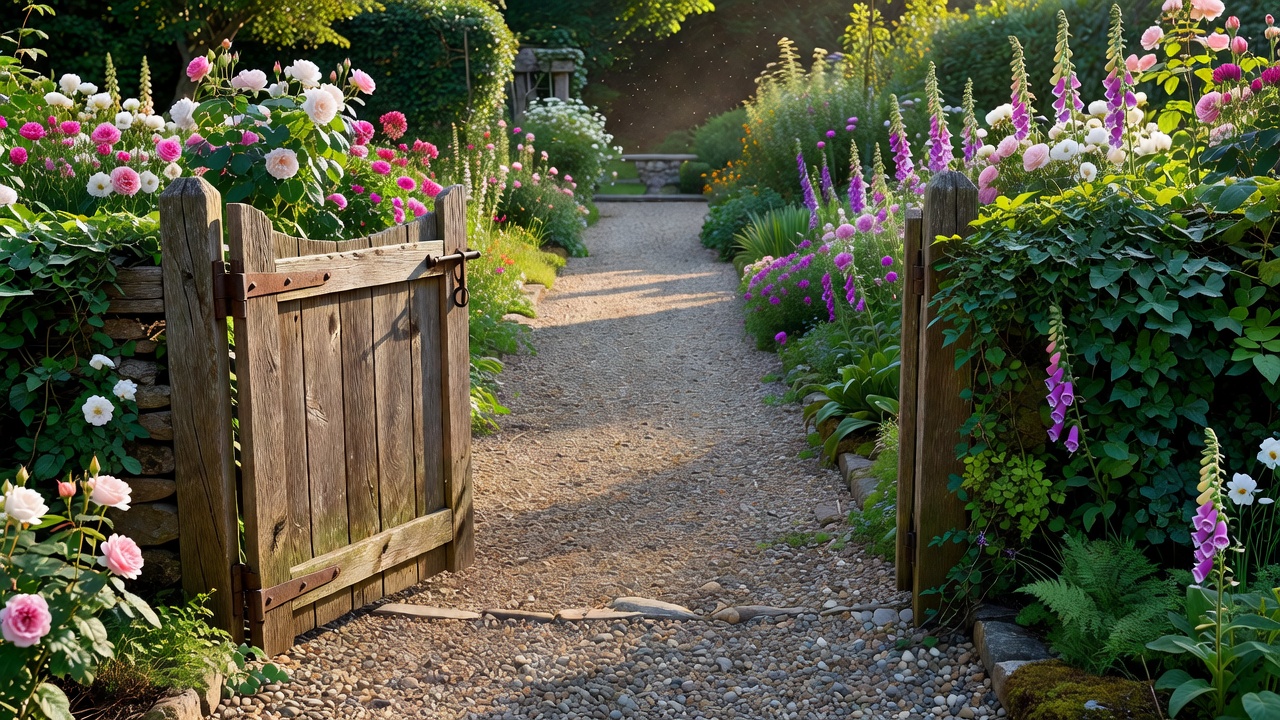
Start with the ground you actually have
Walk the space without any puzzles in mind. Identify a meeting point, a finish, and the paths people may use between them. Note steps, loose gravel, narrow passages, gates, water and any area that must remain undisturbed. A route that looks short on paper may be tiring or difficult for someone using a mobility aid, pushing a buggy or managing sensory overload.
For a first adventure, use a simple loop or an out-and-back route with clearly marked stations. Avoid crossings that make players wonder whether they have already visited a stop. Keep the final gathering point within the agreed boundary, with room for everyone to arrive without blocking other visitors. A mystery should create curiosity, not uncertainty about where people are allowed to go.
In a private garden, agree the route with the owner. In a shared or public space, ask the operator about organised activities, temporary signs and group use. Access is not permission to attach envelopes, conceal containers or reserve a bench. The Royal Horticultural Society’s Garden Wisley, the Royal Botanic Gardens, Kew, and National Trust gardens are examples of managed places with their own visitor rules—not suggested venues for an unapproved hunt.
Give each stop an entrance and an exit
Write a route ledger before writing riddles. For every stop, record what players see, what they do, what answer they obtain and how that answer identifies the next destination. If the answer is simply “tree,” the route is unfinished. Replace it with something unique, such as “Station C beside the large tree,” and make that label visible from the permitted path.
- A / StartReceive a map with a marked boundary.
- B / ObserveMatch a visible pattern to a card.
- C / DecodeTranslate the matching card into a station label.
- D / RevealAssemble the final message together.
Use one principal action per clue. “Find, count, reverse, decode and search again” is several puzzles disguised as one instruction. When a stop needs multiple steps, print them as a short numbered list and include an example. Keep the story separate from the essential direction so players can find the instruction quickly.
Build the ending backwards. Perhaps the group is restoring a fictional gardener’s missing welcome message. Each station contributes a word, and the last stop supplies the sentence order. This gives the earlier discoveries a purpose without requiring a locked chest or a purchased reward. Tell players to keep their cards; otherwise a perfectly good final puzzle can fail because someone tidied away an earlier answer.
Design for the whole group
Ask participants what will help them join in rather than assuming their needs. Offer a short route with equivalent discoveries, seated solving options and spoken versions of written clues. An accessible alternative should carry the same story and satisfying ending, not feel like an unrelated consolation activity.
For mixed ages, rotate useful roles: route reader, observer, materials keeper and answer checker. Avoid making the fastest reader responsible for every decision. If several teams share a garden, stagger starts or use different station orders only when the paths and supervision can support that arrangement. Do not encourage racing near gates, steps or other visitors.
The route is successful when everyone understands the next move—not when the host has managed to hide the clues exceptionally well.
Test the transitions, then the timing
Ask someone unfamiliar with your plan to walk the trail. Stay quiet at first. Record where they hesitate, which landmarks look alike and whether a correct answer produces an obvious next action. Time the whole experience, including gathering, explanations, waiting and the final reveal—not just the moments spent solving.
- Every destination is permitted, reachable and unambiguous.
- A facilitator has spare cards and a complete answer sheet.
- Each puzzle has a gentle hint and a direct bypass.
- The finish has enough space for a shared conclusion.
- A numbered inventory makes collection and reset straightforward.
After the event, walk the route again with the inventory. Remove signs, fasteners and small pieces, including those that have blown under furniture. Record what confused players while it is fresh. Your second trail will usually improve more from a clearer handover than from a more complicated cipher.
Weather alternative: keep the route, change the distance
Move duplicate station cards into one sheltered, authorised space. Keep the same sequence and story, but use a tabletop map to represent the outdoor stops. Postpone if the available shelter or access is unsuitable.